<body><script type="text/javascript"> function setAttributeOnload(object, attribute, val) { if(window.addEventListener) { window.addEventListener('load', function(){ object[attribute] = val; }, false); } else { window.attachEvent('onload', function(){ object[attribute] = val; }); } } </script> <div id="navbar-iframe-container"></div> <script type="text/javascript" src="https://apis.google.com/js/platform.js"></script> <script type="text/javascript"> gapi.load("gapi.iframes:gapi.iframes.style.bubble", function() { if (gapi.iframes && gapi.iframes.getContext) { gapi.iframes.getContext().openChild({ url: 'https://www.blogger.com/navbar/42529977192586283?origin\x3dhttp://jalankayu-food.blogspot.com', where: document.getElementById("navbar-iframe-container"), id: "navbar-iframe" }); } }); </script>
Thursday, May 21, 2009
The Roti Prata (Pratha) is a round pancake, often eaten with mutton or fish curry. It is sold mostly by Indian Muslims at coffeeshops and hawker centres and often costs anything between 60 to 80 cents. To many, it serves as a staple food for breakfast, lunch and dinner although it is most often eaten at breakfast.

Origins
The Roti Prata belongs to a group of breads which are indigenous to India. Brought to Singapore by Indian immigrants, the Roti Prata is said to be either of Punjabi origin as wheat dishes feature prominently in the Punjabi diet, or introduced by the Muslim conquerors, who also specialised in making various types of breads. Whatever the origin, it has become an integral component in the Singapore Indian cuisine.

Preparation
Flour, sugar and salt are the basic ingredients for Roti Prata. Water is added to the flour to form a stiff dough. The dough is kneaded next. This is an important procedure as it makes the dough soft and pliable. By kneading, the dough is also aired and this makes it light. After this, the dough is divided into smaller portions and left to rest overnight.
In the morning,
the ball of dough is placed on the work table and the prata-maker gets to work.
With sure, quick movements, he whirls and twirls the dough from left to right, from right to left until it is paper thin and four or five times larger than the original piece.
This is the most difficult step in prata making and is considered an art in itself.
After folding this thin piece into a rectangle, he tosses the prata on the griddle greased with peanut oil.
The prata is said to be cooked when dark brown "blisters" burst on the surface. A well-made prata should be crisp outside and soft inside.
Pratas can be eaten with sugar, curries or just plain.
The most enjoyable way of eating the pratas is with the fingers; the bread is torn into bite size pieces and dipped into the curry before being popped into the mouth.

Variations
There are many variations of the ordinary prata.
When egg is added, it is an egg prata.
This usually costs double the price of a plain prata.
When minced meat such as mutton or chicken, eggs and onions are added, it is called muruthapa.
Vegetarian Indian restaurants also sell muruthapas with a vegetable filling.
Prata makers have also gained a reputation for their skill in twirling the dough, in particular,
a prata maker who kneads and twirls to the beat of Michael Jackson,
with moonwalk thrown in.


signing off...

5:17 AM

Thursday, April 30, 2009
How to make Roti Prata

Ingredients:
• 3 Cups flour • 5 tbsp Melted ghee or margarine • 3 - 6 tbsp Vegetable oil • 1 Cup warm milk • 1 tsp Salt


How to make Roti Prata:
•Sift the flour and salt into a big bowl, add ghee and stir till mixture looks crumbly.

•Slowly pour in the milk and mix properly.

•Knead the dough without adding extra flour till it pulls away from the bowl and forms a soft ball.

•Continue kneading till the dough is slightly sticky, for about 10 minutes.

•Cut the dough into 8 pieces and roll each piece into a ball, flatten it slightly and massage it with ghee.

•Put the flattened balls on a tray and cover it with a wet cloth.

•Let the dough rest for about 5 hours.

•Now evenly oil a rolling pan and work surface with ghee.

•Roll out each ball and extend it into a paper-thin circle, about 9 inches in diameter.

•Heat a skillet on medium flame and grease it with 1 tsp each of a vegetable oil and ghee.

•Fry the roti gently for about 2 minutes till the bottom is properly browned.

•When the bottom is golden brown and speckled and the roti is puffy, take out it and drain on a paper towel.


Signing off .....

1:31 AM

Friday, April 24, 2009


More Pictures & information would be uploaded after the mid-year examination , where the group would be
going there for researches , we would concentrate on the history and cultures and mainly the food and recipes , as the exams are coming near , and well , we would like to study for it ....
so we will only go to jalan kayu for researches after the mid-year -examintation ,
we would update about the second dish we would be doing our research on soon .
signing off....
7:18 AM

Wednesday, April 22, 2009
What you need to know:
Calories: 173
Sodium: 283mg
Total Fat: 8g
Total carbohydrates: 25g
Saturated: 4g
Dietary Fibre: 1g
Protein: 3g

8:55 PM

1) Team's Approach (Group)

The Team would be separated further into two group mainly one group which would be doing on research , and the other group which would be going to jalan kayu to research on the food , roti prata


2) Team Learning (Group)

We like to work together in groups as it is fun and we can share about our own point of views on how to make the blog nicer and the informations on roti prata.


3) Learning Style (Individual)
Describe briefly your learning style and say why it works for you.

Amelia:i learn through the internet by searching for information.

Demi:I learn through doing research in the library.

Yi Ling: I learn through teacher's guidiance.

Tanwei : i learn through research and also the history & culture of jalan kayu


8:23 PM

Thursday, April 9, 2009
Welcome to the BLog :DDD
The blog will be about food in jalan kayu & it's
history & culture & Nutrition facts & also how you could cook the dish ,

we would be doing our research on is Roti Prata , a common dish
Especially at Jalan Kayu as in the past there were a range of road-side eateries
selling roti prata and hence the roti prata in Jalan Kayu gradually earned a reputation among the people of Singapore as arguably amongst the best in Singapore , therefore it is well-known
for it's delicious roti prata.


Signing off ,
Tanwei


2:33 AM

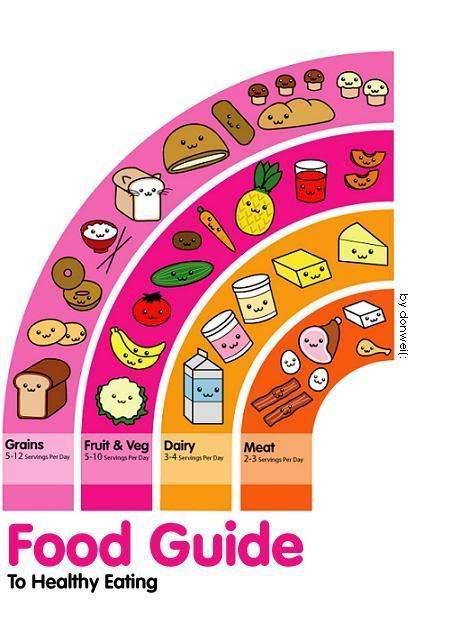
grains
Name: Amelia wong & Demi Zhuang & Tanwei & Teo Yiling
School: Pei hwa Secondary , 1N1(:


vegetables
April 2009
May 2009

meat
Pei hwa secondary ( Home economic):DDDD